What Should Your ATS Automate and What Should Recruiters Still Own?
Discover what recruitment automation should handle in your ATS and which hiring decisions recruiters should still own for a smarter,...
Connect your HR planning, hiring workflows, and talent priorities with Simplicant’s intelligent planning tools. Eliminate scattered processes, align HR and hiring teams, and use real-time recruiting insights to make better workforce decisions from planning to hire.
Request a Demo
HR planning is a strategic process that helps organizations align talent needs with business goals. It gives HR teams a clear way to plan hiring priorities, identify which roles need to be filled, decide who should be involved, and structure how each hiring process should move forward.
With Simplicant, HR workforce planning becomes connected to real hiring execution. Teams can organize hiring plans, manage job requisitions, build custom hiring workflows, track recruitment progress, and use hiring insights to move from reactive hiring to a more proactive planning process.
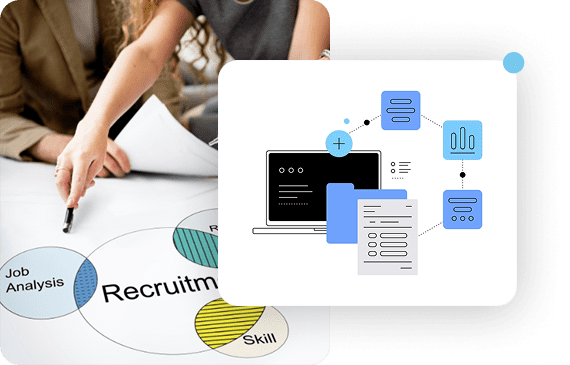

Manage hiring plans, requisitions, open roles, candidate pipelines, and workflow status from one centralized dashboard. Simplicant gives HR teams a clear view of planning activity, so they can track what is planned, approved, active, paused, or completed.

Create and manage job requisitions as part of the HR planning process. Teams can define role details, assign hiring owners, review requirements, and move requisitions through approval before jobs are published.

Set up approval workflows for new roles, replacement hires, offers, and hiring decisions. Simplicant helps teams standardize who needs to review, approve, or take action at each stage of the planning and hiring process.

Create hiring workflows based on role, department, location, or hiring team. Build process stages for screening, interviews, evaluations, feedback, offer approvals, and final hiring decisions.

Automate key actions between planning and hiring execution. Move approved requisitions into job posting, assign workflow stages, notify hiring stakeholders, and keep candidate movement organized through the hiring workflow.

Track hiring progress, workflow bottlenecks, source performance, candidate movement, and time-to-hire trends. These insights help HR teams adjust HR planning decisions based on current recruiting performance.

Keep HR, recruiters, hiring managers, and decision-makers aligned with shared workflows, role visibility, approvals, feedback, and recruiting updates inside one platform, making it easier to create hiring process alignment across teams.

Use reports to review hiring activity, candidate pipeline health, approval status, recruiter workload, and hiring outcomes. These reports help teams improve the hiring process workflow and plan future talent needs with more clarity.

Start by defining the roles your organization needs to fill, along with teams, locations, timelines, hiring managers, and role priorities. This gives your HR planning process a clear structure before recruitment begins and helps every stakeholder understand what needs to happen next.
Move planned roles through the right review and approval process before they go live. Once approved, create a clear hiring workflow for each role, including screening steps, interview stages, feedback requirements, decision points, and offer approvals.
Turn approved roles into active job postings and begin attracting candidates. As applications come in, Simplicant helps teams manage candidate movement, assign tasks, collect feedback, and keep recruiters and hiring managers aligned through every stage of the process.
Monitor role progress, candidate pipelines, workflow delays, and hiring outcomes in one place. Use these insights to understand what is working, remove bottlenecks, and improve future planning with more accurate hiring data.

 Confidence in Every Hiring Decision
Simplicant gives teams the clarity they need to make better talent decisions. With hiring plans, role progress, and recruiting activity connected in one place, HR teams can manage every hiring process workflow with less guesswork and more control.
 Faster Movement from Plan to Hire
Turn planning decisions into hiring action without unnecessary delays. Simplicant helps teams move from role planning to approvals, job posting, candidate review, and offers through a more organized process, making it easier to create hiring process flows that keep work moving.
 Stronger Alignment Across Teams
Keep HR, recruiters, hiring managers, and leadership working from the same plan. With custom hiring workflows, Simplicant helps reduce silos, improve communication, and ensure every stakeholder understands the next step.
Build and manage a structured hiring process while delivering a streamlined, inclusive candidate experience.
Job Managment
Candidate Management
Interview and Feedback Forms
Recruiting Analytics
Support
Upgrade your recruiting infrastructure with scalable tools to configure, automate, and optimize hiring as your business grows.
Job Management
Candidate Management
Interview and Feedback Forms
Job Offers and E-signatures
Employee Referrals
Leverage advanced customization, robust reporting, and enterprise-grade security to power complex, large-scale hiring needs.
Job Management
Candidate Management
Interview and Feedback Forms
Job Offers and E-signatures
Employee Referrals
“I would absolutely recommend Simplicant. The platform provides us with structured, consistent hiring processes, complete visibility into candidate data, and powerful reporting that empowers smarter, data-driven decisions throughout the entire recruitment lifecycle.”
“Simplicant has greatly improved our hiring process by automating key tasks, reducing manual effort, and speeding up recruitment. It’s a great choice for any organization looking to enhance efficiency and hire more quickly.”
“Simplicant is a complete ATS that streamlines the hiring process in an organized way. It helps manage candidates and also saves useful leads that may not fit current roles but can be reused for future openings, ensuring good talent is not lost.
It’s built-in reporting feature provides clear insights into team performance and hiring activity. Overall, it makes recruitment more efficient, structured, and easy to manage.”

Access expert articles, practical guides, and actionable tips to stay ahead
in recruiting and talent
management with Simplicant’s applicant tracking system knowledge hub.

Discover what recruitment automation should handle in your ATS and which hiring decisions recruiters should still own for a smarter,...

Explore how high-volume recruiting helps teams automate hiring tasks, manage candidate volume, and keep recruitment efficient without overloading recruiters.

Can your hiring process keep pace with growth? Ask these 7 questions to assess recruitment scalability, efficiency, and candidate experience.

Hiring the right people is essential for every nonprofit organization. Whether it’s delivering community programs, managing fundraising initiatives, or supporting...

Recruitment has become faster, more digital, and more connected than ever before. Candidates can apply for multiple roles within minutes,...

Your Applicant Tracking System (ATS) should help your team hire faster, collaborate better, and deliver a seamless candidate experience. But...

Learn how AI interview questions help hiring managers improve candidate evaluation, reduce bias, and make smarter hiring decisions with AI...

Discover the top AI skills recruiters need in 2026 to hire smarter, improve candidate screening, and stay ahead in a...

Discover how AI is fueling the rise of fake candidates and learn how recruiters can strengthen candidate screening with AI-powered...
The HR Planning process is the structured approach organizations use to identify hiring needs, plan talent requirements, assign responsibilities, and move roles through approval and recruitment workflows.
HR workforce planning helps organizations align talent needs with business priorities. It focuses on understanding current and future staffing needs, identifying gaps, and planning the right hiring actions.
A hiring workflow is the sequence of steps used to move a role or candidate through recruitment. It can include requisition approval, job posting, screening, interviews, feedback, offer approval, and hiring decisions.
A hiring process workflow is the complete structure used to manage recruitment from planning to final hire. It helps teams standardize approvals, candidate reviews, interviews, feedback, and offers.
Simplicant helps teams create hiring process flows based on role, department, location, or hiring team. Teams can define stages, assign responsibilities, manage approvals, and keep candidates moving through a clear process.
Custom hiring workflows are flexible recruitment workflows designed around your organization's hiring needs. They allow teams to create different steps for different roles while keeping the overall process consistent.
Requisition approvals help ensure every role is reviewed before it is published. This keeps hiring aligned with business needs, reduces confusion, and gives teams better control over open positions.
Workforce planning software helps hiring teams organize role needs, approvals, workflows, candidate pipelines, and reporting in one place. This makes it easier to plan, execute, and improve recruitment activity.
Recruitment analytics help teams track candidate progress, time-to-hire, source performance, workflow delays, and hiring outcomes. These insights help teams improve hiring decisions and reduce bottlenecks.
Hiring workflows are important because they create consistency as teams scale. They help recruiters and hiring managers follow clear steps, reduce manual coordination, and deliver a smoother candidate experience.
